
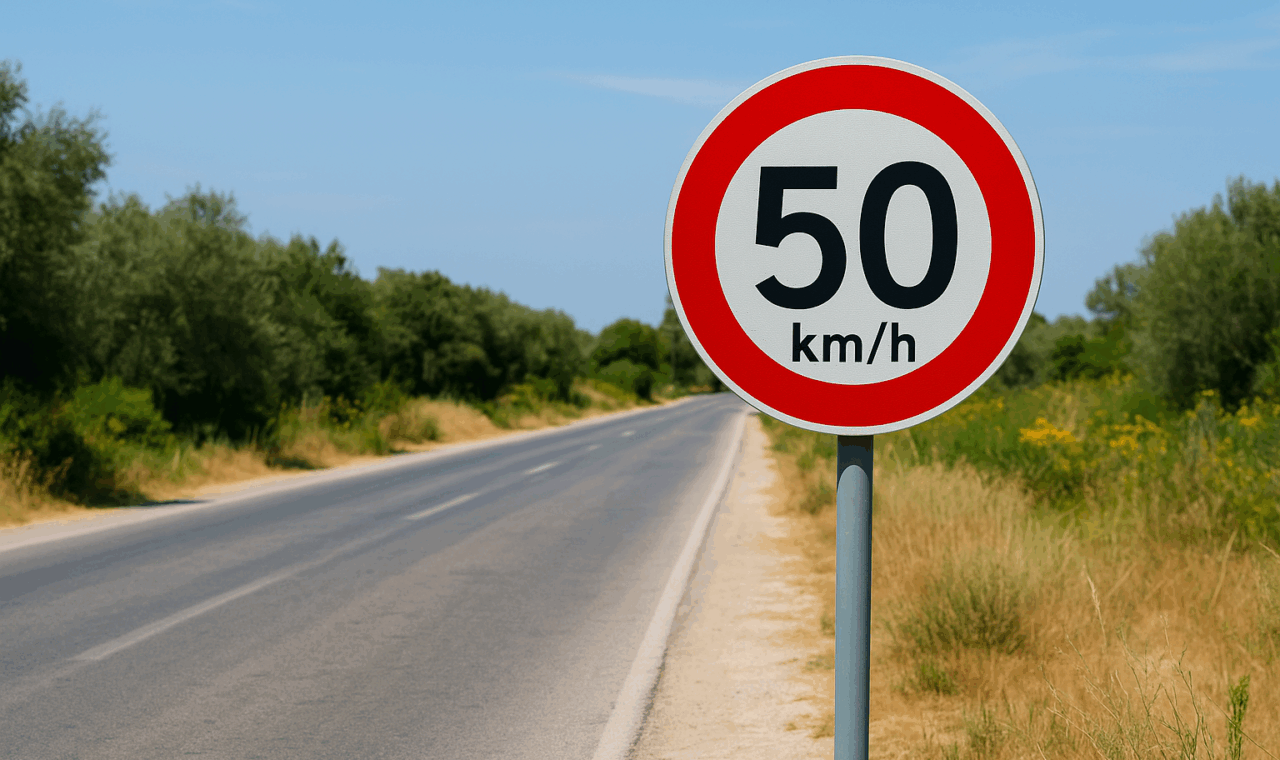
This summer, the Greek island of Kos introduces an ambitious road safety measure: a 50 km/h speed limit across the entire island, applying to both secondary and primary roads. It marks a milestone in Greece’s broader effort to enhance safety and align with European norms.
Why 50 km/h?
Kos isn’t alone, this move mirrors wider national trends:
1. Slowing speeds saves lives
Athens University research and EU data confirm that reducing urban speeds—like moving from 50 to 30 km/h—lowers serious injuries by around 37% and fatalities by 37% on average. Greek urban deaths remain high: in 2023, over half of 621 road fatalities occurred in cities.
2. New Greek traffic code
In late 2024 and spring 2025, Greece implemented sweeping traffic reforms: urban limits in residential and built-up zones dropped to 30 km/h, with exceptions only for main thoroughfares. Digital enforcement, tougher penalties, and clarity on electric scooters accompany these measures.
3. EU inspiration
The “#Love30” campaign, Stockholm Declaration, and WHO backing fuel this shift . Europe-wide case studies—Paris, Brussels, Milan—show clear gains in safety and livability.
4. Tourist-friendly harmony
Kos’s seasonal rush of international drivers unfamiliar with local roads demands a consistent, moderate speed limit. This helps reduce risky behavior, shield vulnerable users, and promote road harmony.
What drivers should expect
Island-wide clarity: no patchwork of limits, everything is capped at 50 km/h.
Safety upsides: for pedestrians, cyclists, and kids in built-up or resort areas.
Fines & tech enforcement: Expect automated cameras, SMS alerts, and fines proportional to the overage.
What’s next?
Evaluation & permanence:If reduced accident rates emerge, the 50 km/h threshold could stay beyond the summer and spread to other small Greek islands or tourist hotspots.
Even slower zones?Already in urban cores, 30 km/h zones are common—in time, some areas of Kos may follow suit, especially near schools or town centers.
Supporting measures:Expect awareness campaigns, traffic calming installations (e.g., speed bumps), bike lanes, and tech solutions like speed-limit assist (ISA), whose adoption is EU‑mandated for new vehicles since July 2022.
In short, this summer’s 50 km/h rule on Kos is more than a seasonal tweak, it’s part of a national and European movement to protect lives, reduce chaos, and create pleasant mobility.
If successful, 2025 could be the turning point toward slower, safer, more enjoyable driving on Greece’s islands.